
Regulation Isn’t Relaxation
This piece dismantles the idea that regulation comes from mindset, affirmations, or thinking harder. The nervous system runs before language, belief, or logic—and it doesn’t respond to shame or self-policing. Regulation isn’t relaxation; it’s capacity. Capacity to hold sensation, emotion, conflict, and activation without collapsing, dissociating, or exploding. Drawing from polyvagal theory, this essay reframes symptoms as intelligence, exposes shame as a primary dysregulator, and challenges the way “calm” is used as a tool of control. Regulation is not about being pleasant or manageable. It’s about autonomy. Slow, unglamorous, biological work—built in inches, not breakthroughs. Capacity first. Calm later. Or not at all.
Riven Hale
12/26/20253 min read
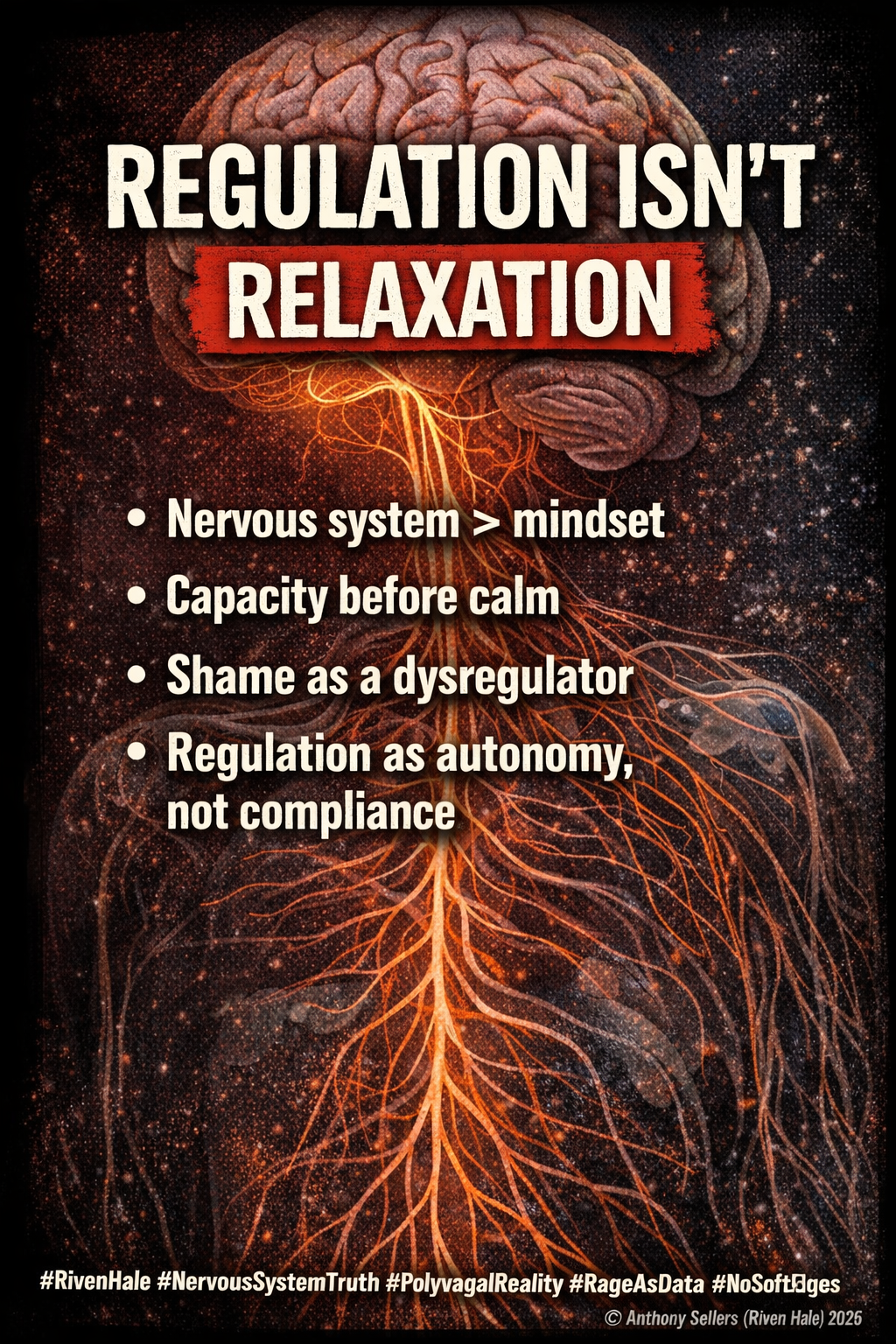
Regulation Isn’t Relaxation
People keep trying to fix nervous systems with thoughts.
Affirmations. Reframes. Mindset tweaks.
As if the body gives a fuck about your inner monologue.
It doesn’t.
The nervous system runs the show long before mindset shows up with a clipboard. And if you’re still trying to think your way into regulation, you’re arguing with a system that learned survival without language.
This isn’t a soft breakdown.
It’s a blunt one.
Nervous System > Mindset
Your nervous system is older than your beliefs.
Older than your coping strategies.
Older than whatever inspirational bullshit you were told would “retrain” you if you just tried harder.
It learned through repetition.
Through patterns.
Through what happened when nobody was watching and no one came to help.
So when your body reacts before your brain can catch up, that’s not failure. That’s hierarchy. Biology always outranks philosophy.
You don’t override a nervous system with logic.
You don’t shame it into safety.
And you sure as hell don’t mindset your way out of survival responses that kept you alive.
Capacity Before Calm
Let’s kill this myth cleanly: calm is not the goal.
Calm is a byproduct—and only when the body decides it’s safe enough to allow it.
For many people, calm was never safe.
Stillness wasn’t peace.
It was the moment you listened harder. The moment before something changed. The setup.
So when you’re told to “just relax,” your nervous system hears lower your defenses. And it reacts accordingly.
Regulation is capacity.
How much sensation, emotion, tension, conflict, or unpredictability your body can hold without bracing, collapsing, dissociating, or detonating.
If your system can’t hold much yet, that doesn’t mean you’re behind.
It means it learned correctly from the environment it survived.
Capacity comes before calm.
Every time.
Polyvagal Theory: Symptoms as Intelligence
Polyvagal theory doesn’t diagnose you.
It explains you.
It shows why your system mobilizes, freezes, or shuts down without asking permission. Why certain tones, silences, or shifts flip switches you didn’t consciously touch. Why “knowing better” doesn’t stop your body from reacting.
Mobilization isn’t aggression.
Freeze isn’t weakness.
Shutdown isn’t laziness.
They’re responses.
Not moral failures.
Not personality defects.
Polyvagal theory doesn’t ask you to force regulation.
It asks you to recognize state, build safety, and stop treating your nervous system like it’s misbehaving.
Shame Is a Dysregulator
Shame is one of the fastest ways to keep a nervous system stuck.
Every time you tell yourself you should be calmer by now, more healed by now, less reactive by now, you add threat to a system already scanning for danger.
Shame doesn’t motivate regulation.
It suppresses it.
It teaches the body that even its protective responses are unsafe. That it can’t win. That it’s wrong no matter what it does.
And a nervous system under shame doesn’t settle.
It tightens.
Regulation Is Autonomy, Not Compliance
Here’s the part people don’t like.
Forced regulation is just control in a softer outfit.
When regulation is framed as being calmer, quieter, nicer, easier to be around, it stops being about safety and starts being about manageability.
Real regulation is autonomy.
It’s your nervous system learning—through experience—that it won’t be overridden, rushed, silenced, or punished for reacting. That it gets to stay online without being forced into submission.
Regulation isn’t about becoming pleasant.
It’s about becoming present without self-abandonment.
If your version of healing requires you to erase your reactions to make other people comfortable, that’s not healing. That’s compliance with better marketing.
The Uncomfortable Truth
Real regulation is boring.
Slow.
Unimpressive.
It doesn’t look good online.
It doesn’t come with breakthroughs or applause.
It’s built in inches, not epiphanies.
And if that frustrates you, good.
That frustration means you’re no longer dissociating from the work.
Capacity first.
Calm later.
Or not at all.
Your nervous system sets the pace now.
#RivenHale #NervousSystemTruth #PolyvagalReality #RageAsData #NoSoftEdges
© Anthony Sellers (Riven Hale) 2026