
Moral Injury After Trauma: When the System Was the Harm
Moral injury isn’t about what happened to you—it’s about what you realized afterward. This article explores the moment survivors recognize that the system wasn’t broken, malfunctioning, or misunderstood—it was functioning exactly as designed. We examine moral injury after trauma, the grief that follows clarity, why disillusionment feels destabilizing, and how choosing truth over belonging changes everything. An authority-level, evergreen breakdown of systemic harm, post-trauma awakening, and what happens when you stop calling damage a glitch and start naming it as policy.
Riven Hale
2/24/20263 min read
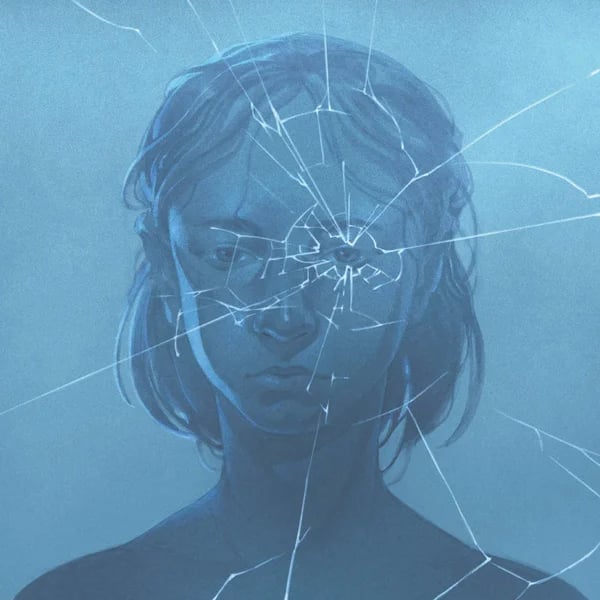
Trauma is often framed as something that happened—an event, a person, a moment you survived.
Moral injury is what happens after, when you finally understand where it happened and why.
For many survivors, the most destabilizing realization is not that the system failed them.
It’s that the system functioned exactly as designed.
This article examines moral injury after trauma, why disillusionment feels worse than the original harm, and why clarity—while painful—is often the beginning of real exit, not collapse.
What Is Moral Injury (Outside the Sanitized Definition)
Moral injury is not just guilt or shame.
It’s the psychological rupture that occurs when your core beliefs about safety, fairness, authority, or care collide with reality.
It happens when you realize:
Harm wasn’t accidental
Abuse wasn’t exceptional
Silence wasn’t misunderstood
And compliance was rewarded because it kept the system intact
Moral injury is the moment you understand that the rules were never broken.
They were enforced.
Trauma Happens In Systems — Not Outside Them
Most trauma does not occur in a vacuum.
It happens inside families, institutions, workplaces, religious structures, medical systems, social hierarchies, and cultural norms.
These systems often:
Reward obedience over truth
Punish disruption more harshly than harm
Protect reputation, continuity, and authority
Frame endurance as virtue and silence as maturity
When you survive trauma inside these environments, your nervous system adapts to the structure, not just the threat.
That adaptation keeps you alive.
The realization of what you adapted to is what causes moral injury.
The Moment of Disillusionment
Disillusionment is not a mood.
It is a cognitive and moral reckoning.
It’s the moment you see that:
Your pain was inconvenient, not invisible
Accountability was optional for those with power
Belonging was conditional on your compliance
And safety depended on how little disruption you caused
This realization often arrives after the danger has passed—when you finally have enough distance to see the pattern.
That delay is why moral injury feels so destabilizing.
You survived by believing something that turns out not to be true.
Why Moral Injury Feels Worse Than Trauma
Trauma overwhelms the nervous system.
Moral injury fractures meaning.
Trauma says: Something bad happened.
Moral injury says: The structure allowed it. Benefited from it. Required it.
This creates a specific kind of grief:
Grief for the self that believed endurance would be rewarded
Grief for the trust you placed in rules, roles, and authority
Grief for the years spent adapting instead of being protected
You don’t just grieve what was done to you.
You grieve what you gave to survive inside something that was never safe.
The Loneliness After Clarity
Once moral injury sets in, belonging changes.
You can no longer participate in narratives that require denial.
You become “difficult,” “negative,” “angry,” or “unstable” simply for naming patterns.
This is not because you are wrong.
It’s because systems depend on unexamined loyalty.
Clarity threatens continuity.
Many people experience profound isolation at this stage—not because they are antisocial, but because truth narrows the room.
Why Some People Return to the System
Leaving psychologically is harder than staying physically.
Systems often offer conditional re-entry:
“If you let it go”
“If you stop talking about it”
“If you forgive”
“If you move on”
This isn’t healing.
It’s reinstatement.
Some people choose it—not out of weakness, but because exile is costly.
Understanding this matters.
Moral injury isn’t resolved by bravery alone.
It requires safety, support, and alternatives to belonging.
Moral Injury Is Not Cynicism
Seeing clearly does not make you bitter.
It makes you selective.
After moral injury, many people:
Withdraw loyalty from harmful structures
Stop confusing tolerance with safety
Refuse to self-sacrifice for appearances
Develop strong boundaries around access and authority
This is not collapse.
It is recalibration.
The system often labels this phase as “anger” or “resentment.”
In reality, it is discernment forming under pressure.
Integration: The Quiet Phase No One Talks About
After clarity comes integration.
This phase can feel like:
Fatigue
Emotional flatness
Loss of motivation
A sense of being unanchored
This is not regression.
Your nervous system is updating its internal map—discarding false rules and stabilizing new ones.
Integration takes time because it requires grieving illusions and building a life that no longer depends on them.
When the System Was the Harm
Not all trauma comes from individual cruelty.
Much of it comes from structures that normalize harm and punish truth.
Naming that reality is not radical.
It is accurate.
Moral injury is the cost of seeing clearly inside a world that prefers compliance over conscience.
If you’re here—angry, disillusioned, grieving, clearer than before—you didn’t break.
You woke up.
And waking up always costs something before it gives anything back.